
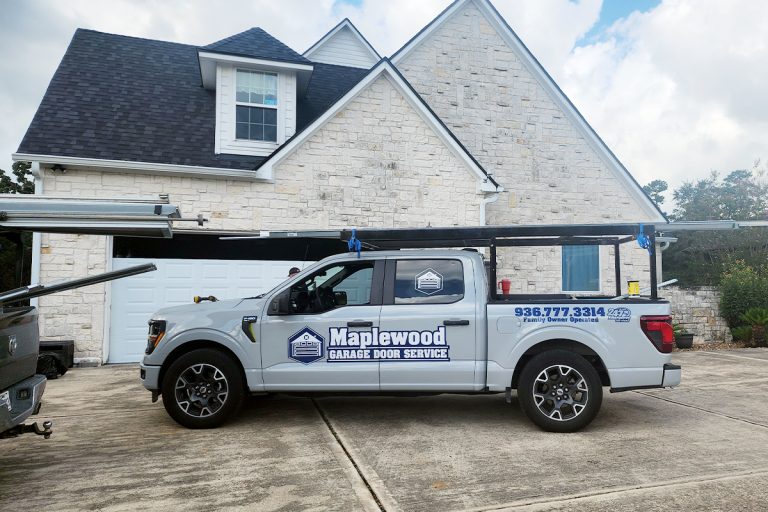
Yes, a short garage door storm preparation check is worth doing before severe weather reaches Huntsville. Start early, inspect only what you can see safely, secure the area, and call a garage door professional for damaged or high-tension parts.
We’re Maplewood Garage Door Service, serving Huntsville since 2015. Storm preparation means checking the door you already have before bad weather arrives and staying away from repairs that can cause serious injury.
NOAA recommends preparing before a storm threatens, understanding local water and wind risks, and having more than one way to receive forecasts and alerts. The National Weather Service also advises securing loose outdoor objects and closing windows and doors when severe weather is approaching. Those are sensible precautions in Huntsville without assuming that every thunderstorm will bring damaging wind, hail, flooding, or a power outage.
Quick Decision Guide: Can You Safely Prepare This Door?
Before checking anything else, stand inside the garage with the door fully closed and the opener idle. Do not place yourself under a moving door.
Continue with the Homeowner Checklist If:
- The door opens and closes evenly without jerking, binding, or scraping.
- The door is not crooked in the opening.
- The tracks, rollers, hinges, panels, and weather seal look intact from the floor.
- No cable is loose, frayed, hanging, or off its drum.
- No spring looks separated, stretched, or broken.
- The opener and safety sensors operate normally.
Call a Professional Before the Storm If:
- The door is unusually loud, slow, shaky, or uneven.
- A panel is cracked, bent, separated, or bowing.
- Hardware appears loose in an area you cannot reach from the floor.
- The door reverses unexpectedly or will not close.
- The opener strains, hums, or moves the door only partway.
- You do not know whether an existing reinforcement system is complete or installed correctly.
Treat These as a Hard Stop:
Do you see a broken spring, frayed or slack cable, cable off a drum, bent track, damaged bottom bracket, crooked door, or a door that feels abnormally heavy? No. Stop using the door. Keep people, pets, and vehicles away and arrange professional garage door repair.
Do not adjust, loosen, tighten, wind, unwind, remove, or reposition springs, cables, drums, bottom brackets, or any part that controls door tension. Do not pull the emergency release on a door that is open, crooked, damaged, or unsupported. DASMA notes that proper installation, operation, maintenance, and testing are necessary for safe operation, and warns that an improperly adjusted door or opener can exert deadly force.
The Safe Garage Door Storm Preparation Checklist
1. Follow Official Weather Information
Check the Huntsville forecast through the National Weather Service and enable local emergency alerts. Keep a second alert method available, such as NOAA Weather Radio, especially if internet or cellular service becomes unreliable. Ready.gov says thunderstorms can bring intense wind, flash flooding, hail, and lightning, and recommends community warning systems plus NOAA Weather Radio.
A watch means conditions are possible. A warning means the hazard is occurring or imminent in the warned area. Your first priority during a warning is shelter, not last-minute garage work. The National Weather Service says to go inside a sturdy building during a high wind or severe thunderstorm warning and move to an interior room or basement.
Homeowner action: Finish garage preparation well before wind, lightning, or heavy rain begins. If thunder is audible or a warning is active, go indoors and stay away from the garage door.
2. Clear the Garage Door’s Travel Path
Move bicycles, toys, tools, storage bins, lawn equipment, and vehicles away from the door, tracks, opener rail, and safety sensors. Keep the floor clear on both sides of the opening. A clutter-free area makes it easier to spot water intrusion or damage later and reduces the chance that an object blocks the door.
Bring loose outdoor objects inside only while conditions are calm. Do not leave patio furniture, trash cans, ladders, garden tools, or sports equipment where wind could drive them toward the door. The National Weather Service specifically recommends securing loose objects before severe weather.
Do not: Stack heavy items against the inside of the garage door. A sectional door needs room to flex and travel as designed, and improvised bracing can damage panels or create a dangerous obstacle.
3. Observe the Door from the Floor
With the door closed, use a flashlight and look across the inside surface. Check for fresh dents, cracked sections, separated panel joints, missing fasteners, gaps along the sides, or daylight around the perimeter. Look at the tracks and hinges without touching or climbing.
Then operate the door once from a normal control location where you can see it completely. Keep everyone away. Listen for grinding, popping, rubbing, or a sudden change in speed. Stop the test if movement is uneven or the door appears unstable.
Safe homeowner work: Visual observation from the floor and one normal operating cycle.
Professional work: Structural panel repair, track alignment, reinforcement installation, fastener replacement on moving hardware, and all spring, cable, drum, bracket, or tension work.
If the door has not been serviced recently or something has changed, schedule garage door maintenance while the forecast is still calm. A pre-storm visit should be an honest condition check, not an excuse for unnecessary upgrades.
4. Check the Bottom Seal and Perimeter Weatherstripping
Look for a bottom seal that is torn, flattened, brittle, pulled out of its retainer, or missing in sections. Inspect the side and top weatherstripping for gaps or loose pieces. You may wipe dirt and leaves from the seal and the floor with a damp cloth while the door is fully closed and stationary.
Weatherstripping can reduce wind-driven rain at the opening, but it does not make a garage watertight or floodproof. Ready.gov recommends knowing your flood risk, clearing drains and gutters, moving valuables higher, and following evacuation directions If water could enter the garage, move chemicals, paper records, electronics, and other valuables to a higher safe location. Never rely on the garage door as a flood barrier.
Call a professional if: The seal retainer is bent, the door does not meet the floor evenly, a bottom bracket is damaged, or replacing the seal would require working around cables or brackets.
5. Test the Opener Only as the Manual Directs
Find the model number and owner’s manual for your garage door opener. Follow that manufacturer’s exact instructions for testing the photoelectric sensors and automatic reversal system. Do not guess at test procedures, force the door, bypass a sensor, or alter opener limits to make a damaged door close.
If a sensor is loose, wiring is damaged, the door fails a safety test, or the opener behaves differently than the manual describes, stop using automatic operation and request service. A storm is not the time to experiment with settings.
If power-outage access matters to your household, check whether the existing opener has battery backup and review its manual now. LiftMaster states that its battery-backup openers keep the opener running when power is down.Battery backup is an option, not a requirement for every home. If replacement is already justified by the opener’s condition and outage access is important, discuss it during an opener installation consultation, rather than assuming the most expensive model is necessary.
6. Identify Any Existing Wind-Rated Features
Look for the door label, product paperwork, installation instructions, and any permanent reinforcement components already installed. Take clear photos for reference. A wind-rated door is a complete, tested assembly with specific sections, hardware, tracks, supports, and installation requirements. A sticker, heavy panel, or opener horsepower rating alone does not prove the system is rated for a particular wind pressure.
Safe homeowner work: Locate labels and paperwork, photograph the closed door, and ask a professional to identify what you have.
Professional work: Determining code or pressure requirements, confirming the door’s rating, installing a rated door, or adding a manufacturer-approved reinforcement system.
Do not attach lumber, drill new holes, add random struts, or copy a brace seen online. Improvised changes may not match the door design and can interfere with safe operation. If you already own a removable manufacturer-designed brace, use it only according to the instructions for that exact door. If instructions or parts are missing, do not improvise.
7. Photograph the Door and Protect Important Information
Before a storm, take dated photos of the door’s exterior, interior, labels, opener model, tracks, panels, and surrounding garage. Save copies somewhere you can access if your phone is damaged. Review your insurance policy and know how to report damage. NOAA includes insurance review, emergency supplies, forecast awareness, and a family plan among pre-storm preparations.
Keep Maplewood Garage Door Service’s number, (936) 777-3314, with your household contacts. The company serves Huntsville 24/7 and offers emergency and same-day garage door service when available. Calling early gives you more options than waiting until hazardous conditions are underway.
8. Close the Door and Leave It Alone During the Storm
Once preparation is complete, park where your household plan requires, close the garage door normally, and keep people and pets away from it. Do not repeatedly open the door to check conditions. Do not stand near garage windows or the exterior opening during high wind or hail.
If an evacuation order is issued, follow local officials. Garage door preparation never outranks life-safety instructions. Ready.gov advises finding safe shelter immediately under a flood warning and never walking, swimming, or driving through floodwater.
What to Check After the Storm
Wait until officials say conditions are safe. From a distance, look for fallen power lines, standing water, displaced tracks, bent panels, broken glass, debris, and a crooked door. Ready.gov warns not to touch wet electrical equipment or electrical equipment while standing in water.
If the garage is dry and the system looks unchanged, inspect from inside with the door closed before trying one normal cycle. Keep the doorway clear and stop immediately if the door binds, shakes, sounds different, or moves unevenly.
If the door is off track, jammed, crooked, partly open, or connected to damaged cables or springs, No. Stop using the door. Do not push it closed, pull the emergency release, or attempt to secure it with tension adjustments. For a visibly broken spring, use Maplewood’s garage door spring replacement page to understand the professional service, not as a DIY guide.
Frequently Asked Questions
Should I Brace My Garage Door with Plywood or Lumber?
Not unless that method is part of the written instructions for your exact door and reinforcement system. Random lumber, screws, or drilled holes are not a verified substitute for a rated assembly. Ask a garage door professional to identify the door and recommend only compatible options.
Can I Pull the Emergency Release Before a Storm?
Only follow the opener manual when the door is fully closed, stable, and undamaged. Never pull the release on an open, crooked, heavy, or damaged door. If a spring or cable is suspect, No. Stop using the door.
What If the Garage Door Will Not Close Before Severe Weather?
Do not force it or change opener limits to hide the problem. Keep people away, call for service while conditions are safe, and follow official shelter or evacuation instructions if the storm arrives first. Maplewood offers 24/7 emergency and same-day service at (936) 777-3314, subject to safe travel and availability.
Is a Battery Backup Opener Necessary for Storm Preparation?
Not for every household. It may be useful when garage access during an outage is important, but it does not strengthen the door against wind. Check your current opener and manual first, then compare compatible options only if replacement or backup access makes sense.
How Much Does a Pre-Storm Garage Door Inspection Cost?
Pricing depends on the inspection scope, door condition, parts, local labor, and whether repair is needed. As a national 2026 reference, HomeGuide lists an annual garage door inspection and tune-up at $100 to $250, with possible minimum service fees. That is not a Maplewood quote. Ask what is included and approve any repair separately.
Can Weatherstripping Stop Floodwater?
No. Weatherstripping can help with ordinary drafts and some wind-driven rain, but it is not a flood barrier. Know your property’s flood risk, move valuables higher, clear drainage paths, and follow local alerts and evacuation instructions.[5]
Is It Safe to Inspect Springs and Cables Myself?
Visual observation from the floor is enough. Do not touch, adjust, remove, or tension springs, cables, drums, or bottom brackets. If anything looks broken, loose, frayed, displaced, or uneven, No. Stop using the door.
A Calm Plan Beats a Last-Minute Repair
The best storm checklist is simple: monitor official alerts, clear the opening, observe the door, check seals, follow the opener manual, document the system, and call a professional for anything structural, electrical, or tension-related. Do the work while conditions are calm. Once a warning is active, sheltering safely matters more than the garage.
For a condition check or repair in Huntsville, call Maplewood Garage Door Service at (936) 777-3314 or contact the team online. Service is available 24/7, including emergency and same-day requests when conditions allow.